Thai food & snacks
How to Import Thai Herbal Tea Blends: A Step-by-Step Buyer Guide
Thai herbal tea blends sell well abroad, but the import is less about taste and more about classification, paperwork and shelf life. Here is how to import Thai herbal tea blends without surprises.

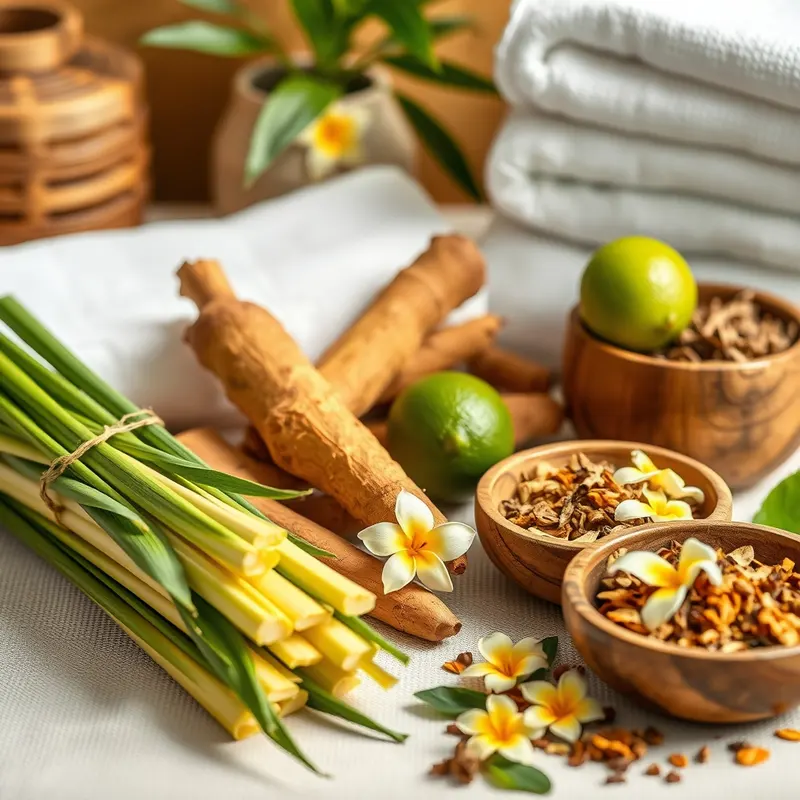
Lemongrass and pandan, butterfly pea with lime, bael fruit, roselle, ginger and turmeric: Thai herbal tea blends have a loyal following in cafes, wellness shops and online stores far beyond Bangkok. The product itself is simple. The import is not. Whether a blend is treated as a food, a herbal product or a supplement in your market decides which documents you need, how the label must read and whether the shipment clears or sits in a bonded warehouse. This guide walks through how to import Thai herbal tea blends step by step, from sourcing to landed cost, with the questions to ask at each stage.
Start with classification: is your blend a food, a herbal product or a supplement?
The single most expensive mistake in this category is assuming that herbal tea is just tea. In Thailand, a dried herb blend sold for infusion is usually regulated as a food, while the same herbs sold with health claims or in capsule form may fall under a different Thai FDA category. Your destination market draws its own lines. In the EU, for example, some botanicals are accepted as traditional foods while others may need a novel food assessment; in the US, the FDA treats most herbal teas as conventional foods unless the label makes structure or function claims that push them towards dietary supplements. Other markets have their own lists of permitted and restricted plants.
Why this matters before you talk to any supplier:
- **Ingredients**: a blend that includes a plant restricted in your market cannot be fixed later with paperwork. Ask for the full botanical list with Latin names and the percentage of each component.
- **Claims**: wording like 'detox', 'lowers blood sugar' or 'sleep aid' on the Thai packaging may be acceptable locally but can reclassify the product on arrival.
- **Format**: loose leaf, pyramid bags, paper tea bags and instant powders can sit in different tariff lines and attract different checks.
A practical first step is to list the exact blends you want to carry, then check each botanical against your national food authority's guidance or ask a licensed customs broker to confirm the likely treatment. Treat the answer as a reference point and verify it with the authority itself when the volume justifies it. Only then start shortlisting suppliers, because the classification tells you which documents a supplier must be able to produce.
Where to source Thai herbal tea blends and how to vet the supplier
Thai herbal teas come from several kinds of suppliers, and each has trade-offs for an importer.
- **Manufacturers with their own blending and packing lines**: best for private label and consistent quality, usually prefer larger and repeat orders, and are more likely to hold the certificates you need.
- **Agricultural cooperatives and community enterprises (OTOP-type producers)**: often the source of distinctive regional blends and a good story for marketing, but export documentation and English communication can be limited.
- **Trading and export companies**: convenient for mixed containers across several Thai herbal products, and they usually understand export paperwork; make sure you know who actually produces the tea and whether the trading company can obtain producer-level documents.
- **Online B2B marketplaces and directories**: useful for building a long list quickly, especially where the platform shows verified Thai suppliers with company registration checks; verification lowers but never removes the need for your own due diligence.
Whoever you talk to, run the same vetting sequence. Ask for the company registration, the food production license for the facility and any GMP or HACCP certification, then confirm the certificate numbers with the issuing body rather than accepting a PDF. Ask whether the supplier has exported to your region before and request a reference shipment record with sensitive details redacted. Order samples of every blend and have them tested locally for the parameters your market cares about, typically pesticides, heavy metals, moisture and microbiology. Finally, visit or arrange a third-party inspection of the drying and packing area; herbal teas are vulnerable to mould and cross-contamination, and a short visit tells you more than a glossy catalogue. Many Thai wellness suppliers are small businesses that welcome serious buyers, so a respectful, well-prepared approach gets better answers than a long list of demands.
Documents to request before you place an order
Herbal tea blends sit close to the line between food and health product, so the document pack is heavier than for snacks or sauces. Request these before paying a deposit, and check that the names, addresses and product descriptions match across every document:
- **Product specification sheet** for each blend: botanical names, ratios, origin of each herb, processing steps (sun-dried, oven-dried, cut size), net weight and packaging format.
- **Certificate of Analysis (CoA)** from a recognised laboratory for a recent lot, covering moisture, microbiology and contaminants. Ask how often the supplier tests and whether they can test to your market's limits.
- **Pesticide residue report**: particularly important for leafy herbs and flowers; maximum residue limits differ by country, so share your market's requirements with the lab.
- **Food production license and GMP or HACCP certificate** for the facility, with numbers you can verify.
- **Certificate of Free Sale or health certificate** issued or endorsed by the Thai authorities, if your importing country requires one; some markets ask for it only for certain product groups, so confirm first.
- **Allergen and additive declaration**: some blends include dried fruit, honey granules, flavourings or anti-caking agents that must appear on your label.
- **Shelf-life statement** with the storage conditions it assumes.
If a supplier cannot provide a document, ask why rather than walking away immediately. A small producer may never have exported and may be willing to obtain the certificate at your cost or shared cost. A supplier who promises that no documents are necessary for your market is a bigger warning sign than one who admits a gap. Keep every document in a dated folder; your customs broker and your own retailers will ask for them later, and good records are what make the second and third shipments routine.
Import rules in your market: labelling, testing and the broker conversation
Once the supplier side is clear, turn to your own market. The rules below are typical categories rather than a legal checklist; confirm each with your national authority or a licensed customs broker before the goods ship.
**Registration and prior notice.** Several countries require the importer or the foreign facility to be registered before food can enter, and some require advance notice of each shipment. Find out whether these apply to herbal teas and whether your company or the Thai facility must register.
**Labelling.** Most markets require the product name, full ingredient list in descending order, allergens, net weight, country of origin, importer or distributor details, lot number and date marking, all in the local language. Health claims are the usual trap: a Thai pack that mentions digestion or relaxation may need a neutral label for your market. Decide early whether you will relabel on arrival or ask the supplier to print an export label; the second option is cheaper per unit but needs careful proofing.
**Testing on arrival.** Herbal products are often sampled for pesticide residues, heavy metals and, for some botanicals, specific contaminants. Build the cost and the delay of possible testing into your plan, and use your pre-shipment CoA to reduce the chance of a failed test.
**Restricted botanicals.** Keep a list of plants that are limited or need approval in your market and share it with every supplier so that blends are formulated accordingly.
The broker conversation is worth having before the first purchase order. Bring your blend list with Latin names, the intended packaging and the claims you want to make on the label, and ask the broker to walk through the likely tariff classification, duty rate and documentary checks. A good broker will also tell you which documents the Thai side must stamp or legalise. Treat anything you read online, including this article, as a starting point for that conversation rather than a final answer.
Packaging, shelf life and shipping: protecting aroma and avoiding mould
Dried herbs are light, bulky and sensitive, which shapes every logistics decision.
**Moisture is the enemy.** Herbal blends that leave Thailand at the right moisture level can still absorb humidity in a container crossing the equator. Insist on food-grade inner bags with a moisture barrier, sealed cartons and, for sea freight, desiccant packs and a container that is dry and odour-free. Ask the supplier how finished goods are stored before pick-up; a week in an open warehouse during the rainy season can undo careful drying.
**Aroma and light.** Flowers such as butterfly pea and roselle lose colour in light; lemongrass and pandan lose aroma in heat. Opaque or foil-lined packaging and a cool, covered storage chain preserve the qualities your customers pay for. If you plan retail-ready packaging from Thailand, test a few units through a full shipping cycle before committing to the design.
**Air or sea?** Air freight suits trial orders, high-value blends and fast replenishment; the volumetric weight of light cartons makes it costly per kilogram. Sea freight, often as less-than-container-load for first orders, is cheaper for volume but adds weeks and exposure to humidity. Many importers start with air for the first two orders, learn the real sell-through rate, then move to sea with proper packaging.
**Shelf life and dating.** Request the supplier's shelf-life basis and compare it with your sales cycle plus transit time. A blend with a stated shelf life of eighteen months that spends four months in transit and customs leaves you a shorter window than it seems.
**Tariff codes.** Herbal infusions usually fall under the chapters for plants used in infusions, tea, or food preparations depending on composition and format; the exact code affects duty and inspection. Have the broker confirm the code for each blend rather than copying one code across the whole order.
Costing your first order and the mistakes that eat margin
Herbal tea looks like a high-margin product, and it can be, but only if the landed cost is calculated honestly. Build a simple sheet per blend with these lines:
- Ex-works or FOB price per unit, by packaging format.
- Export packaging, labelling and any relabelling at destination.
- Laboratory testing before shipment and possible testing on arrival.
- Freight, insurance and local handling.
- Duty, import VAT or sales tax and broker fees.
- Certification or legalisation fees for documents.
- Samples, courier costs and your own travel if you visit.
- A reserve for one failed test, one delayed shipment or one lot you cannot sell.
Divide the total by the sellable units, not the shipped units, because some stock will go to sampling, marketing and breakage. Compare the result with the retail or wholesale price your market will actually bear, which you can check by looking at what comparable blends sell for in the channels you plan to use.
Common mistakes to avoid:
- **Ordering too many blends at once.** Each blend needs its own documents, tests and label. Start with three to five that cover different tastes and use cases, then expand based on sales.
- **Letting the supplier choose the claims.** You are responsible for the label in your market, so write the copy yourself and have it checked.
- **Skipping the local test.** A single pre-shipment CoA protects against the biggest risk at the lowest cost.
- **No written specification.** Without it you cannot reject a lot that tastes different from the sample.
- **Treating a trading company as the producer.** Know who makes the tea so you can trace a problem back to its source.
If you want to compare several producers quickly, a wholesale Thai products catalog or a verified B2B directory can give you a first view of blends and packaging formats, but the final choice should rest on samples, documents and your own checks. Done carefully, a first container of Thai herbal tea blends is a manageable project and a strong base for a repeatable import line.
Need expert support?
Leave your details and our team will get back to you.
FAQ
Frequently asked questions
Do I need an import license to bring Thai herbal tea blends into my country?
It depends on the market and on how the blend is classified. Many countries treat herbal infusions as conventional food and require importer registration rather than a product-specific license, while blends with health claims or certain botanicals may need approval. Confirm the requirement with your national food authority or a licensed customs broker before ordering, using the exact ingredient list of each blend.
Can the Thai supplier print my market's label directly on the packaging?
Often yes, and it is usually cheaper than relabelling on arrival. Provide print-ready artwork in your language with the ingredient list, allergens, net weight, importer details and any mandatory statements, then ask for a physical proof before the production run. Keep responsibility for the wording with you, because the importer is normally accountable for label compliance in the destination market.
How do I check that a Thai herbal tea supplier is legitimate?
Ask for the company registration, the food production license and any GMP or HACCP certificates, then verify the numbers with the issuing bodies rather than relying on copies. Order samples, test them locally, request an export reference and, where possible, visit the facility or commission a third-party inspection. A verified marketplace listing is a helpful filter, but your own checks remain essential.
Which Thai herbal tea blends are easiest to import for a first order?
Blends built from widely recognised food herbs such as lemongrass, ginger, pandan, roselle or butterfly pea generally raise fewer questions than blends containing less familiar medicinal plants. Even so, check every botanical against your market's permitted list and avoid health claims on the packaging. Starting with a small range lets you learn the documentary routine before adding more complex formulas.
Prepared by the Import Thai team for informational purposes. Some links may lead to referred partners.
Articles
Related articles
Shelf Life Requirements for Importing Thai Snacks: What Buyers Need to Know
If you're sourcing Thai snacks for resale abroad, shelf life is often the first thing that trips up a shipment — not price, not packaging design, but how long a product legally and

Thai Dried Fruit Wholesale Import: A Buyer's Guide to Sourcing from Thailand
If you're exploring Thai dried fruit wholesale import for the first time, the biggest worry is usually the same one every buyer faces: how do you find a reliable producer, understa

How to Import Thai Instant Noodles: A Practical Buyer Guide
Learning how to import Thai instant noodles is less about finding a factory and more about three decisions made before you ask for a quote.

Thai Coconut Oil Export Regulations: What Importers Must Check
Thai coconut oil export regulations are not one single rulebook. The rules that apply to your shipment depend on whether the oil is sold as food, as a cosmetic ingredient or as a f

How to Import Thai Mangosteen Products: A Buyer's Guide
Wondering how to import Thai mangosteen products without losing a shipment to spoilage or paperwork? Mangosteen is one of the more demanding items to bring in from Thailand, becaus

How to Import Thai Coconut Milk Powder: A Step-by-Step Guide for Buyers
If you're planning to import Thai coconut milk powder, your biggest worry is probably not the product itself — it's whether the supplier is reliable, whether the paperwork will cle