Customs & compliance
What Documents Does a Customs Broker Need From an Importer?
The documents a customs broker needs from an importer bringing goods in from Thailand: identity and registration, commercial paperwork, transport documents, origin certificates and product-specific permits.

A customs broker can only clear what you can document. Most delays at the border on Thai shipments are not caused by the goods themselves but by a missing certificate, an invoice that does not match the packing list, or an importer registration that was never completed. If you are asking what documents does a customs broker need from an importer, the honest answer is: a short core set that applies to every shipment, plus a product-specific set that depends on what you are bringing in. This guide walks through both, in the order your broker will ask for them, so your first clearance from Thailand is a routine one rather than a scramble.
Set 1: Who you are, the importer identity and registration documents
Before a broker looks at a single invoice, they need to establish that you are entitled to import in your country and that they are authorised to act for you. This set is requested once, kept on file, and refreshed when something expires. It is also the set most first-time importers forget to prepare, which is why brokers often cannot start work the day the container arrives.
Typically requested:
- **Business registration documents:** certificate of incorporation or trade registration, and proof of the registered address.
- **Importer registration or customs number:** many countries require importers to register with customs or a trade authority before their first entry. Names differ by country; your broker will tell you the exact one.
- **Tax identification:** VAT, GST or equivalent registration, since import taxes are usually assessed against it.
- **Power of attorney or broker authorisation:** a signed document allowing the broker to lodge declarations on your behalf. Some customs systems require this to be filed electronically before any entry.
- **Bank or payment details for duties:** either a deferment account, a bond where applicable, or confirmation that you will pay duties per shipment.
- **Contact person for queries:** a named individual who can answer questions about the goods quickly during inspection.
A practical tip: send this set to your broker while your supplier in Thailand is still producing the order. Brokers can pre-register you, flag any gap, and tell you which product-specific permits to start applying for. Rules on importer registration change, so verify the current requirements with your national customs authority or your clearance partner rather than relying on what a forum post said last year.
Set 2: The commercial documents that describe the deal
These are the documents that tell customs what you bought, from whom, at what price and under which terms. They are issued by your Thai supplier, and the single most important thing you can do is check them against each other before they are sent to the broker. Customs systems compare fields across documents; a mismatch between the invoice total and the packing list quantity is one of the most common reasons an entry is held for query.
- **Commercial invoice:** seller and buyer details, invoice number and date, description of goods in plain language, quantity, unit price, currency, total value, Incoterm (for example FOB Laem Chabang or CIF to your port), and the country of origin. Ask your supplier to include the HS code they use for export; your broker will confirm the correct code on the import side.
- **Packing list:** number of cartons, contents per carton, net and gross weights, dimensions, marks and numbers. It should reconcile exactly with the invoice.
- **Sales contract or purchase order:** not always required, but useful when customs questions the declared value or the relationship between buyer and seller.
- **Proof of payment:** bank transfer confirmation or letter of credit documents, often requested when the declared value looks unusual for the goods.
Two habits save time. First, insist on product descriptions that a customs officer can picture: a line reading cosmetics is weaker than facial sunscreen lotion, SPF 50, 50 ml tube, 24 per carton. Second, when you request quotes from Thai suppliers, ask at that stage whether their export documentation follows a standard format; a supplier who exports regularly produces clean paperwork, which is worth more than a small discount from one who does not.
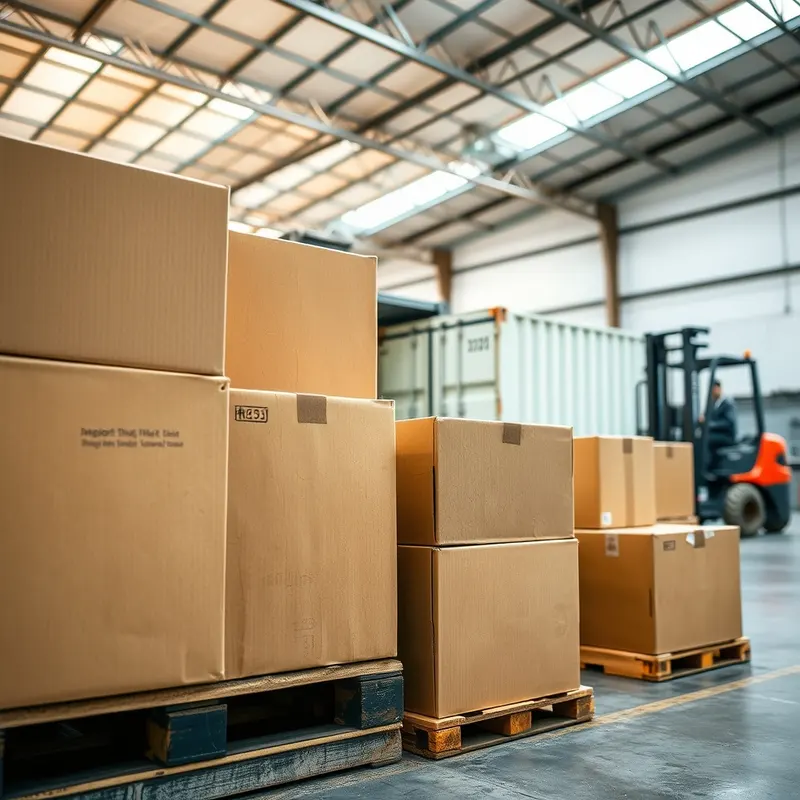
Set 3: Transport documents that prove the goods moved
Your broker needs evidence of how the goods travelled and who controls them on arrival. The document differs by mode, but the purpose is the same: it links the physical cargo to the commercial documents and allows release from the carrier.
- **Bill of lading (sea freight):** issued by the shipping line or forwarder. It names the shipper, consignee, notify party, vessel, ports, container numbers, seal numbers and a cargo description. An original bill of lading may need to be surrendered for release; a telex release or express bill avoids courier delays. Agree with your supplier and forwarder in advance which form you will use.
- **Air waybill (air freight):** the air equivalent, non-negotiable, released against identity rather than an original document.
- **Road consignment note:** relevant for shipments from Thailand to neighbouring countries by truck.
- **Arrival notice:** sent by the carrier or its agent, stating when the cargo is available and what local charges apply. Brokers use it to time the entry.
- **Container or cargo release information:** pin codes, delivery orders or terminal references, depending on the port.
Check that the consignee on the transport document matches the importer of record on your registration documents. If you used a freight forwarder in Thailand, the master bill may name the forwarder while a house bill names you; your broker needs the house bill. Keep the forwarder, broker and supplier on a shared email thread from the moment the booking is confirmed, so everybody is working from the same container number and ETA. It sounds basic, but a surprising number of queries come down to someone quoting an old booking reference.
Set 4: Origin documents that affect how much duty you pay
Thailand has trade agreements with many markets, and the difference between paying the standard duty rate and a preferential rate often depends on one piece of paper. Your broker cannot claim a preference without it, and cannot easily add it after the entry has been lodged, so this is a document to organise before shipment.
- **Certificate of origin:** issued in Thailand by the Department of Foreign Trade or an authorised body, in the form required by the relevant agreement. ASEAN buyers will know Form D; other agreements use their own forms. Ask your supplier early whether they can apply for it and whether the goods actually meet the origin rules; not every product made in Thailand qualifies.
- **Origin declaration on the invoice:** some agreements allow an approved exporter to declare origin on the commercial invoice instead of a separate certificate. Your broker will know whether your market accepts this.
- **Non-preferential certificate of origin:** sometimes required for statistical or licensing reasons even when no duty reduction is claimed.
The value of getting this right is real but should be verified case by case: duty rates, agreement coverage and documentary conditions change, and the final determination rests with your customs authority. A reasonable approach is to ask your broker for the current standard and preferential rates for your HS code before you order, then decide with your supplier whether applying for the certificate is worth the administrative effort. For many consumer goods it is; for low-duty items it may not be. Whatever you decide, keep copies of origin documents for the retention period your customs law requires, since post-clearance audits can request them years later.

Set 5: Product-specific permits, certificates and labels
This is the set that varies most and causes the most surprises. Customs brokers clear goods, but other agencies regulate them, and the broker needs the documents those agencies demand before an entry will be accepted. The list depends entirely on what you are importing; the examples below are common categories for Thai goods, offered as reference only. Confirm the actual requirements with the relevant authority in your country or with your clearance partner before shipping.
- **Cosmetics and personal care:** a Thai sunscreen or skincare product usually needs product registration or notification in the destination market, ingredient listings, and labels in the local language. Some countries also require free-sale certificates from the exporting country, which your supplier can request from the Thai authorities.
- **Food, beverages and Thai health supplements:** health certificates, ingredient and nutrition declarations, shelf-life statements, and often a prior import permit or facility registration. Products with animal or plant content may need phytosanitary or veterinary certificates.
- **Household chemicals such as a Thai fabric softener:** safety data sheets, ingredient disclosure and sometimes chemical registration, with dangerous-goods paperwork if the formulation is classified as hazardous for transport.
- **Private label goods:** if you are producing private label in Thailand under your own brand, the importer of record is usually the responsible party for registrations, so start them early and make sure the manufacturer supplies test reports and manufacturing documentation per item when you place the order.
- **Electrical goods, toys, textiles:** conformity certificates, test reports and labelling to the destination standard.
Ask your broker for a document checklist specific to your HS codes before the goods leave Thailand. Brokers maintain these lists for the products they handle regularly and will tell you quickly if something is missing.
How to organise the file so clearance is routine
Having the documents is half the job; having them in the right form, at the right time, is the other half. Experienced importers treat each shipment as a file that is complete before the vessel sails, not after it arrives.
A working method:
- **One folder per shipment,** named by container or booking number, containing the commercial, transport, origin and product documents as PDFs, plus a short summary sheet listing supplier, Incoterm, HS codes and expected arrival.
- **Send drafts to the broker before shipment:** draft invoice and packing list allow the broker to pre-classify the goods and spot mismatches while the supplier can still correct them.
- **Final documents on departure:** the bill of lading or air waybill, the signed final invoice, the certificate of origin and any permits, sent the day they are issued.
- **Originals where required:** confirm with the broker which documents must be originals and courier them separately from the goods.
- **Retention:** keep the full file for the period your customs law requires, including the broker's entry and the duty payment record.
Finally, agree on a service scope with your broker in writing: classification, valuation, entry lodgement, duty payment handling, inspection attendance and delivery coordination are separate tasks, and not every broker does all of them. If you need a Thailand-side sourcing or documentation partner as well, platforms such as THAIMOST (thaimost.com) let you compare verified suppliers and request export paperwork alongside quotes, while your broker remains responsible for the import entry itself.
Need expert support?
Leave your details and our team will get back to you.
FAQ
Frequently asked questions
Can a customs broker start clearance before my goods arrive from Thailand?
Yes, and it is the best way to avoid delays. With draft commercial documents and your registration details, a broker can pre-classify the goods, check for missing permits and prepare the entry so it is lodged as soon as the carrier confirms arrival. Send drafts when the order is confirmed, then final documents on the day of departure.
What happens if my invoice and packing list do not match?
Customs systems compare the two, and a mismatch in quantities, weights or values commonly results in a query or an inspection, which adds time and sometimes storage charges. Ask your Thai supplier to reconcile both documents before issuing them, and check them yourself against the purchase order before forwarding to the broker.
Do I need a certificate of origin for every shipment from Thailand?
Only when you want to claim a preferential duty rate under a trade agreement, or when your market requires one for licensing or statistical reasons. Ask your broker for the standard and preferential rates on your HS code before ordering, then decide with your supplier whether applying for the certificate is worthwhile for that product.
Which documents must be originals and which can be scans?
It depends on your country and on the document. Original bills of lading may need to be surrendered unless a telex or express release is arranged, and some permits or origin certificates are accepted only in original form. Confirm the list with your broker for each shipment and courier originals separately from the cargo.
Prepared by the Import Thai team for informational purposes. Some links may lead to referred partners.
Articles
Related articles

How to Import Thai Latex Pillows: A Step-by-Step Buyer Guide
If you are working out how to import Thai latex pillows, the first thing to know is that the product is simple and the logistics are not: pillows are bulky, light and sensitive to how they are compressed and packed.

How to Find Handicraft Suppliers in Thailand: A Buyer's Method
Thai handicrafts sell well abroad precisely because they are made in small workshops, and that is also why they are hard to source at scale. If you are working out how to find hand

Questions to Ask Before Signing a Contract with a Thai Supplier
Most sourcing problems in Thailand don't happen at the factory floor — they happen in the contract, or the lack of one. A vague agreement on payment terms, quality specs, or who pa