Customs & compliance
Import Clearance Process at Thai Customs Explained for Buyers
The import clearance process at Thai customs explained from the buyer's side: what happens before your goods leave Thailand, which documents matter and where delays start.

Most importers never see Thai customs, yet it shapes whether their shipment leaves on time and whether the documents that arrive at their own border are correct. Buyers search for the import clearance process at Thai customs explained because the same paperwork flows both ways: the export declaration filed in Bangkok is the basis for the invoice, packing list and certificate of origin you will present at home. This guide follows a shipment from the supplier's warehouse to the vessel, explains who does what, and shows where buyers can prevent delays without being in Thailand.
Two clearances, one set of documents
Every international shipment from Thailand passes through two customs processes. The first is export clearance in Thailand, handled by the exporter or their customs broker. The second is import clearance in your country, handled by you or your broker. Buyers often treat them as unrelated, but the data entered in the Thai export declaration becomes the reference point for everything that follows.
If the exporter declares an HS code, a value or a quantity that does not match the commercial invoice you present at your border, your customs authority may query the shipment. If the product description on the Thai side is vague, the certificate of origin issued from that declaration may be vague too, and preferential duty under a free trade agreement may be refused.
So the practical rule is simple: agree the document set with the supplier before the goods are packed, not after they sail. At minimum, that means:
- One commercial invoice with consistent product names, unit prices, Incoterm and currency.
- One packing list with cartons, weights and dimensions that match what is loaded.
- Agreed HS codes for each line, checked against both the Thai tariff and your own.
- A clear decision on who applies for the certificate of origin and which form.
When you work through verified Thai suppliers with export experience, this coordination is routine. With a first-time exporter, you may need to lead it yourself or ask your freight forwarder to step in.
Step by step: how export clearance works in Thailand
Thai customs operates an electronic declaration system, and most of the process happens before the truck reaches the port. From the buyer's perspective the sequence looks like this:
**1. Booking and documents.** The exporter or forwarder books space with a carrier and prepares the invoice, packing list and any permits. For regulated goods such as food, cosmetics, Thai health supplements or Thai herbal products, licences or notifications from the relevant Thai authority may need to be referenced.
**2. Electronic export declaration.** A licensed broker files the declaration with the goods description, HS code, value, weight and consignee. The system returns a declaration number that follows the shipment.
**3. Risk assessment.** The system assigns the shipment to a channel. Many compliant shipments are released on documents alone. Others are selected for document review or physical inspection, which adds time at the port or inland depot.
**4. Gate-in and loading.** Cargo arrives at the container yard or airport terminal, the declaration is matched to the physical cargo, and the goods are released for loading.
**5. Post-shipment documents.** After departure, the carrier issues the bill of lading or air waybill. The exporter then applies for the certificate of origin and any health or free-sale certificates you requested.
The buyer does not file anything in Thailand, but you influence steps 1 and 5 heavily: how early you confirm the document list, how precisely the products are described, and whether you asked for certificates before the goods left rather than afterwards.

Documents buyers should request and check
The documents you receive from Thailand are only useful if they match each other and match your own import requirements. Use this as a working checklist and adapt it to your product and destination with your broker.
- **Commercial invoice**: seller and buyer details, invoice number, Incoterm, currency, unit and total values, country of origin on each line.
- **Packing list**: carton count, net and gross weight, dimensions, marks and numbers. Your border agency compares this against the physical cargo.
- **Bill of lading or air waybill**: consignee and notify party exactly as you instructed; a spelling error here can hold cargo at destination.
- **Certificate of origin**: the general form from the Thai Chamber of Commerce or the preferential form issued by the Department of Foreign Trade for free trade agreements. Confirm which form your country accepts for duty reduction.
- **Product-specific certificates**: health certificate, free-sale certificate, halal certificate, certificate of analysis, phytosanitary certificate for plant products. Which of these you need depends on your destination; ask your import authority, not the supplier.
- **Fumigation or wooden packaging treatment** records where pallets are used.
Ask for draft copies of the invoice and packing list before loading and compare them line by line against your purchase order. It is far cheaper to correct a draft than to amend a bill of lading or re-issue a certificate of origin after departure. Keep all versions in one folder with dates; disputes about who changed what are common and tedious.
Where shipments from Thailand get delayed
Delays rarely come from Thai customs being slow. They come from mismatches and missing pieces that only surface when a declaration is filed. The recurring causes:
- **Product descriptions too generic.** A line that says cosmetics or snacks invites questions. Ask the supplier to describe each item the way it appears on the retail label, plus the HS code.
- **Regulated goods without the right reference.** Food, supplements, cosmetics and herbal products are regulated in Thailand. If a product lacks the required Thai notification or licence, the export may still be possible in some cases, but the certificate you need at destination may not be issued. Clarify this per SKU before you pay a deposit.
- **Value or quantity inconsistencies.** Discounts, free samples and bonus units confuse declarations. Agree in advance how samples are shown on the invoice.
- **Late certificate applications.** A certificate of origin applied for after sailing can arrive after the cargo. If your duty rate depends on it, ask the supplier to start the application as soon as the bill of lading is issued and to send you a scanned copy.
- **Physical inspection.** Some shipments are selected at random or because of the product category. Build buffer time into your plan rather than assuming release on documents.
- **Dangerous goods.** Aerosols, perfumes with high alcohol content and some essential oils need dangerous goods declarations, and carriers can refuse mis-declared cargo.
For each of these, the fix is upstream: a precise purchase order, a document checklist agreed in writing and a forwarder who talks to the supplier's broker directly.
Who should handle clearance on the Thai side
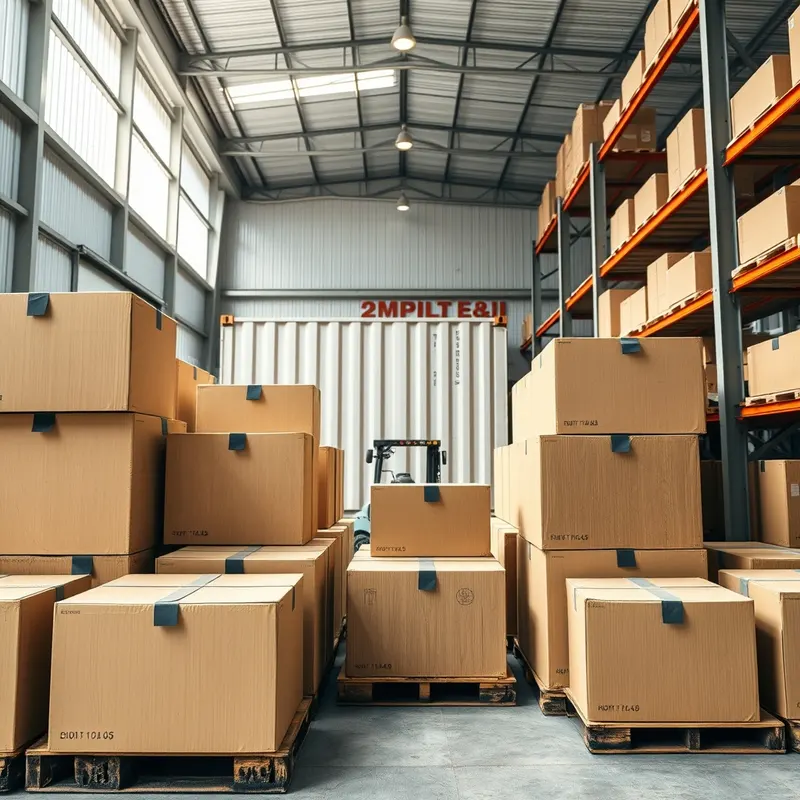
Under most Incoterms used for Thai exports, the seller is responsible for export clearance. Under FOB, CFR and CIF the exporter or their broker files the declaration and delivers the goods to the vessel. Under EXW the buyer takes responsibility from the supplier's door, which means your forwarder must arrange Thai export clearance, something many small importers underestimate.
Three practical options:
**Let the supplier's broker do it.** Suitable when the supplier exports regularly and you trust their document quality. Ask for the broker's contact so your forwarder can coordinate.
**Appoint your own forwarder in Thailand.** Gives you one point of accountability for export clearance, consolidation and shipping, which is helpful when you buy from several suppliers in one container. The forwarder also tells you when a supplier's documents are not up to standard.
**Use a sourcing or distribution partner.** Some buyers purchase through a Thai wholesale distributor or sourcing partner that consolidates several brands and provides documents per item at the time of order. ThaiNex (thainex.com) is one example of this model for consumer goods; B2B marketplaces that verify suppliers are another route when you want to compare several factories first. In both cases, your own due diligence on documents still applies.
Whichever model you choose, write down in the purchase agreement who files the export declaration, who pays for certificates and what happens if a document is wrong. Clarity here resolves most disputes before they start.
A buyer's timeline for a smooth clearance
Thinking in stages keeps the process under control even when you are thousands of kilometres away.
**Before ordering** - Confirm HS codes and import requirements for each product with your own broker or customs authority. - Ask the supplier which certificates they can obtain for each SKU and which they cannot. - Decide the Incoterm and who handles Thai export clearance.
**At order confirmation** - Issue a purchase order with product names, codes, quantities, prices and the agreed document list. - Agree how samples and free units will be shown on the invoice.
**Before loading** - Review draft invoice and packing list against the purchase order. - Check consignee and notify party details for the bill of lading. - Confirm the certificate of origin form and who applies.
**After departure** - Collect scanned copies of all documents and verify consistency. - Pass the full set to your import broker early so pre-arrival processing can begin where available.
**On arrival** - Keep the Thai declaration number and supplier contacts at hand in case your customs authority raises a query.
None of this requires you to understand Thai customs law in detail. It requires you to treat documents as part of the product you are buying, and to work with suppliers and forwarders who treat them the same way. Regulations change, so confirm current requirements with the Thai Customs Department, the issuing agencies and your own authorities before each new product category.
Need expert support?
Leave your details and our team will get back to you.
FAQ
Frequently asked questions
Does the buyer have to deal with Thai customs directly?
Usually not. Under FOB, CFR and CIF terms the exporter or their licensed broker files the Thai export declaration. Under EXW the buyer's forwarder must arrange it. Either way, the buyer influences the outcome by agreeing precise product descriptions, HS codes and a document checklist before the goods are packed.
Which certificate of origin do I need from Thailand?
It depends on your destination and whether you claim preferential duty. A general certificate is issued by the Thai Chamber of Commerce, while preferential forms for free trade agreements are issued by the Department of Foreign Trade. Ask your own customs broker which form is accepted, then tell the supplier before shipment so the application starts on time.
Why did my shipment get inspected in Thailand?
Thai customs assigns shipments to channels through risk assessment. Some are released on documents, others are selected for document review or physical inspection, at random or because of the product category and declaration details. Precise descriptions and consistent documents reduce the chance of queries, but no exporter can guarantee release without inspection.
Can regulated products like cosmetics or supplements be exported without Thai registration?
Rules differ by product and change over time, so verify with the relevant Thai authority and your import authority. In practice, products without the required Thai notification may not qualify for certificates such as a free-sale certificate, which many destinations require. Clarify this per SKU with the supplier before paying a deposit.
Prepared by the Import Thai team for informational purposes. Some links may lead to referred partners.
Articles
Related articles
How to Choose a Freight Forwarder for Thailand Imports
If you're sourcing from Thailand, the freight forwarder you pick will shape almost everything about your import experience — how smoothly customs clearance goes, whether your docum
What Is a Bill of Lading in International Shipping? A Buyer Guide
What is a bill of lading in international shipping, why does your Thai supplier keep asking about it, and what should you check before paying? A plain-English guide.

Thai Wellness Products for Private Label Sourcing: A Buyer's Guide
Thai wellness products for private label sourcing range from herbal balms and massage oils to spa sets and ingestibles. This guide covers which categories travel well, how to vet a supplier and what documents to request.